Industry 4.0: Thailand’s Turning Point for the Future of Manufacturing
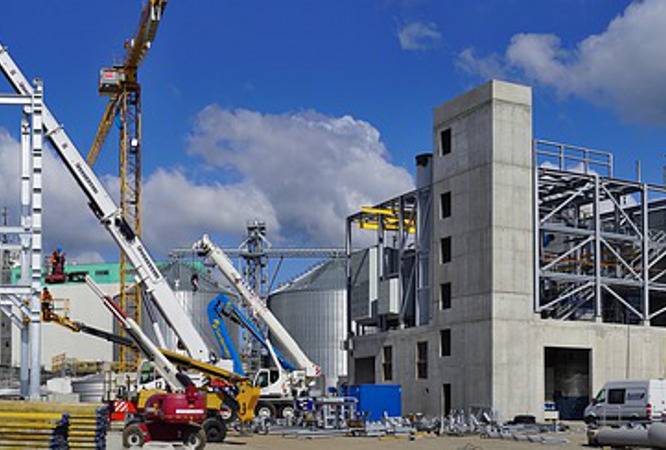
Source of Photo: https://pixabay.com/photos/industry-site-798642/
From our point of view, 304 Industrial parks have experienced various development in Thailand’s economy, from labor-intensive to capital-intensive production process. We believe that the understanding of Thai geo-economics will be beneficial to anyone who have worked or interests to invest in this attractive country. In this article, we will pinpoint some broader look on the movement of Thai manufacturing sector to enhance the knowledge on Thai industry ,and locations that contain possibility that will improve to be the place receiving numerous advantages from the development.
Industrial 4.0
When the world population is increasing, many changes arise as well. They can be noticeable sooner or later, depending on their nature. One of events supporting an increase in resources needed by humans is industrial change. There are 4 macro-level changes that affect manufacturing and industrial operational approaches so far. The recent change is called differently in each country and Thailand uses the term “อุตสาหกรรม 4.0” which translates to “Industry 4.0”
The government enacted this policy in order to develop Thailand well along with global trends. Policymakers have not only virtue and visions for sustainable development, but also cooperation from people who want to change from the present state to the better. Its results may not be tangible in a short run. However, if everyone is cooperative and sincere in developing the country, we shall see better changes in the long term.
The Beginning of Industry 4.0
Before Industry 4.0 exists, there were 3 industrial revolutions. Development and changes of each revolution are as follows:
- First Industrial Revolution was a transition from human and animal labour to machinery—mainly the use of steam power and waterpower.
- Second Industrial Revolution introduced the use of electricity which massively increased productivity. Industrial properties like factories with greater capacity were constructed and developed in this era.
- Third Industrial Revolution brought technologies into manufacturing and replaced human labour with automation which is more precise and effective.
- Fourth Industrial Revolution (Industry 4.0) utilises Internet to connect entire databases on manufacturing and service, uses various communication tools to transmit information on a real-time basis, advances machines that could produce small parts more precisely, and greatly increases effectiveness and quality of manufacturing.
This digital-based Industry 4.0 originates from a German national strategic initiative. Germany is one of the world’s industry leaders that quickly foresee the changing trends and maintain its world leading position in terms of manufacturing. In 2013, the German government announced policies regarding any aspects in industrial sector that need further improvement. Information technology system has been playing an integral role in operation, as well as information system among tools and state-of-art technology that meets consumers’ needs better than before. This policy was designed to support the changing world with rising population, to understand diversity, to reduce an unnecessary use of resources, and to meet the needs inclusively.
On the other hand, Thailand 4.0 strategic initiative is an approach that the Thai government uses to develop domestic economy holistically. They want to lift the national income classification from middle to higher level. Thailand has been at this level, or as often heard as the “middle-income trap,” for over 20 years. More technology, innovation, and digital system will play an important role in consistent with the world trends. There were 3 economic transitions before Thailand 4.0, which will be described briefly as follows:
Relationship Between Industry 4.0 and Thailand 4.0
Industry 4.0 is an economics-driven policy at a global level. Its name varies depending on each country such as Industry 4.0 (Germany), Smart Manufacturing (USA), Factories of the Future or FoF (European Union), Industrial Value Chain Initiatives or IVI (Japan), and Made in China 2025 (China). Its objectives include transforming industrial manufacturing pattern to digital system and connecting different parties via Internet in order to meet a more diverse need as mentioned above.
On the other hand, Thailand 4.0 strategic initiative is an approach that the Thai government uses to develop domestic economy holistically. They want to lift the national income classification from middle to higher level. Thailand has been at this level, or as often heard as the “middle-income trap,” for over 20 years. More technology, innovation, and digital system will play an important role in consistent with the world trends. There were 3 economic transitions before Thailand 4.0, which will be described briefly as follows:
- Thailand 1.0 emphasised on agriculture and cultivation. Any excessive yields after reserving enough amount for household use would be sold for money in return.
- Thailand 2.0 maintained agriculture but started to use tools and machines in production, and transformed into an economy era of light industry, some of which include shoes, leather goods, and textiles.
- Thailand 3.0 is an era of heavy industry and export. It is the present era where national income only grows by 3.4% and the domestic economy has fallen into a middle-income trap for a long period of time. Hence, development approaches must be defined in order to change economic structures.
- Thailand 4.0 focuses on manufacturing that utilises innovation. This initiative has targeted 5 groups of technology and industry i.e. food and agriculture; biotechnology; wellness and medical technology; smart machines; and digital system and artificial intelligence. With industrial development and creation of high-value culture and service, Thailand 4.0 is a policy that will help develop domestic economy and prepare for a changing industrial system at a global level.
Another point of Thailand Industry 4.0 initiative is the development of Eastern Economic Corridor or EEC. This project has locational advantage of being close to Bangkok, airports, and seaports. This enables a more convenient transportation. There are several interesting provinces for investment including Chon Buri, Rayong, Chachoengsao, and Prachin Buri. Besides locational advantage, these provinces are surrounded by industrial estate and properties with leading companies’ manufacturing bases, largely from electronic and automotive industries. If anyone is looking for an industrial property for rent in this area, we hereby present an interesting industrial property called the 304 Industrial Park located in Prachin Buri with a total area of nearly 32,000,000 square meters. This industrial property is perfect for long-term investment. It comprises of power plant with a generating capacity of 670 megawatts and reservoirs with a capacity of 40 million cubic metres on a 1,920,000 square meters. Therefore, sufficient public utility system is assured and facilities to support future labour habitation are well-prepared.
The government enacted this policy in order to develop Thailand well along with global trends. Policymakers have not only virtue and visions for sustainable development, but also cooperation from people who want to change from the present state to the better. Its results may not be tangible in a short run. However, if everyone is cooperative and sincere in developing the country, we shall see better changes in the long term.
Related News & Media


