How to Choose the Right Factory Location for Your Business?
Choose Wrong, Lose Opportunities! Why Factory Location Determines Business Success
When establishing a factory, the first and most critical consideration for entrepreneurs is selecting the right location. A suitable location enables a business to grow sustainably and reach its full potential. On the other hand, choosing an inappropriate factory location that does not align with the nature of the business may lead to various challenges – most notably, increased costs due to operational inconvenience. These may include long transportation distances, limited access to public services and utilities, geographical and climatic conditions that pose disaster risks, and differences in land value across areas.
Build a Strong Factory Foundation with Key Location Factors You Should Not Overlook
Choosing a factory location is one of the most important decisions and should be carefully considered from the outset, as a good location supports long-term business growth. The eight key factors that should not be overlooked when selecting a factory location are as follows:
-
Proximity to Suppliers, Manufacturers, and Customers
A good factory location should be considered alongside the locations of suppliers, manufacturers, and customers. When these parties are located nearby, travel and logistics become more convenient, significantly reducing costs related to money, time, and labor.
-
Convenient Transportation
Accessibility is a critical factor, whether by land, air, or water. In addition to convenient transportation routes, the factory location should be well connected to key destinations and regions. Important considerations include traffic density, road safety, expressway connectivity, and access to public transportation.
-
Access to a Skilled Workforce
A suitable factory location should be close to sources of skilled labor, as workforce quality is a key business driver. Locating a factory within reasonable proximity to skilled labor pools helps attract workers and ensures access to qualified personnel.
-
Urban Planning and Zoning Regulations
Zoning laws and urban planning regulations can be complex. Entrepreneurs should thoroughly study and understand these regulations, as certain areas may prohibit factory construction or impose restrictions on building size. A clear understanding is essential before proceeding with factory development.
-
Access to Public Services and Utilities
Factory locations should be close to public services and utilities such as hospitals, police stations, and fire stations to ensure rapid access in emergency situations. Additionally, proximity to amenities such as shopping malls, convenience stores, and markets is beneficial.
-
Environmental Conditions
External environmental factors should also be considered, including suitable climate conditions and potential disaster risks – especially earthquakes and flooding. Other environmental considerations include traffic conditions, road quality, electricity supply, and water systems.
-
Land Rental Costs or Land Prices
Factory locations should ideally be in areas with strong future growth potential. Land cost is a crucial factor, as land likely to appreciate in value offers long-term benefits. Leasing land is also a viable option for businesses with limited budgets seeking to reduce upfront land costs.
-
Factory Construction Budget
When evaluating construction budgets, site-specific costs must also be included, such as land filling volume, pile foundation depth, and construction labor costs. Even with the same building plan, construction costs can vary significantly depending on the location.
Checklist Before Choosing a Factory Location: Where Will It Truly Work?
Once you have identified a potential factory location that appears suitable for your business, it is essential to assess the site’s potential before making a final decision to proceed with construction. A preliminary checklist can be used to evaluate the location from a broad perspective as follows:
-
On-site location assessment by visiting the area to evaluate surrounding conditions such as climate, land characteristics, and the demographics of nearby communities.
-
SWOT analysis of the location, considering the four key factors – strengths, weaknesses, opportunities, and challenges. This analysis helps visualize the feasibility of building a factory in the area.
-
Use of market data and statistical information to support decision-making. From a marketing and economic perspective, numerical data related to the costs of similar items across different locations can be compared. This may be presented in comparison tables or statistical analyses, such as scoring various factors across multiple locations and summarizing the results as percentage scores for each area.
Choosing the Right Factory Location to Strengthen Business Stability
In addition to the key location factors discussed earlier, entrepreneurs should also consider additional, more nuanced aspects such as community impact, employee and community safety, and the future availability of public utilities.
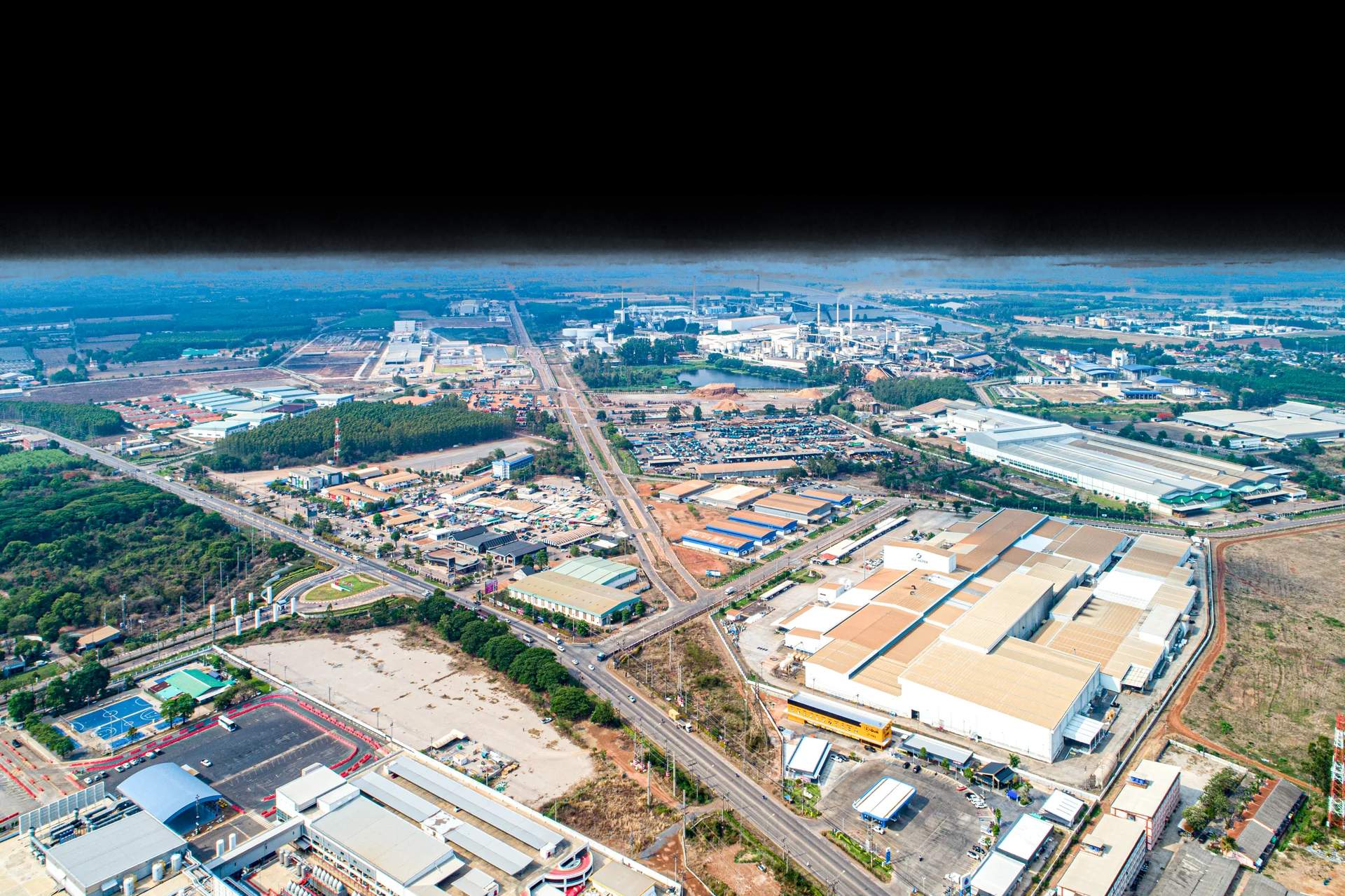
304 Industrial Park stands out for its comprehensive readiness, making it an ideal location for factory construction and expansion, with the following advantages:
- Strategic location: Situated along the Southern Economic Corridor (SEC), a key economic zone connecting Thailand with Indochina countries and the Greater Mekong Subregion (GMS).
- Close to Laem Chabang Deep Sea Port, Suvarnabhumi Airport, Bangkok, and Nakhon Ratchasima
- Surrounded by diverse industries and a large labor pool in Eastern Thailand
- Elevated land, flood-free: Reduces flood risk and potential damage, making it suitable for long-term investment
- Strong soil conditions that reduce construction costs: High land stability helps lower foundation and structural construction expenses
- Connected to major logistics hubs: Located near Laem Chabang Port and Bangkok, ensuring convenient transportation of goods
- Comprehensive utilities and infrastructure: Industrial-standard electricity, water supply, road systems, and wastewater management
- Ready-to-supply integrated renewable energy: Including biomass power and solar energy, supporting sustainable growth for modern businesses
Most importantly, we have a team of experts ready to provide end-to-end consultation and support, from initial planning and factory construction to after-sales services and continuous safety systems. We are committed to ensuring that every project progresses smoothly and safely, delivering strong investment value – making 304 Industrial Park a location you can trust at every stage of your business growth.
Related News & Media



304 Industrial Park
Creating a future-ready ecosystem for businesses, with green energy, complete facilities, and global connectivity.
Contact Us