Clearing Up All Questions: What’s the Difference Between Carbon Neutral and Net Zero?

Both Carbon Neutral and Net Zero share the same goal of reducing greenhouse gas emissions. However, they differ significantly in terms of approach, scope, and methodology. This article will help explain the meaning, differences, and importance of Carbon Neutral and Net Zero for the business and industrial sectors, as follows:
What Is Carbon Neutrality?
Carbon Neutrality refers to achieving zero carbon dioxide (CO₂) emissions from production activities through three key mechanisms:
- Reduction (Reduce) Reducing carbon emissions released into the environment, such as switching to renewable energy sources and clean energy.
- Removal (Remove) Removing carbon that has already been emitted into the atmosphere, for example through reforestation to increase natural carbon sinks, or by using Carbon Capture and Storage (CCS) technology to capture carbon at the source and permanently store it underground.
- Offset (Offset) Offsetting carbon emissions by purchasing carbon credits (Carbon Credit Offset). Since carbon removal methods generally cannot achieve 100% removal, carbon offsets are used to compensate for the remaining emissions through the purchase of carbon credits.
What Is Net Zero?
Net Zero Emissions refers to achieving net zero greenhouse gas emissions by balancing all greenhouse gases, such as CO₂, CH₄ (methane), and N₂O (nitrous oxide). This means ensuring that the amount of greenhouse gases emitted is equal to the amount removed.
For example, if a factory emits 100 million tons of greenhouse gases, achieving Net Zero requires removing an equivalent amount of 100 million tons.
Key Measures for Achieving Net Zero Emissions Include:
- Reducing the use of fossil fuels and transitioning to clean energy sources such as solar and wind power
- Removing greenhouse gases from the atmosphere through natural methods, such as reforestation and ecosystem restoration (Carbon Sink)
- Improving production processes to minimize greenhouse gas emissions as much as possible
Differences Between Carbon Neutral and Net Zero
- Carbon Neutral, or carbon neutrality, refers to creating a balance between the amount of carbon released into the atmosphere and the amount removed. This can be achieved through three mechanisms: reduction, removal, and offsetting.
- Net Zero Emissions, or net zero greenhouse gas emissions, cover all greenhouse gas emissions such as CO₂, CH₄, and N₂O. The goal is to eliminate the creation of excess greenhouse gases in the long term by reducing emissions at the source, rather than relying solely on offsetting.
|
Carbon Neutral |
Net Zero |
|
|
Meaning |
Create a balance between carbon emissions and carbon removal |
Reduce greenhouse gas emissions to zero |
|
Scope |
CO2 |
CO2, CH4, N2O |
|
Approach |
Reduce, Remove, Offset |
Direct reduction at the source |
|
Offsetting |
Use carbon credits |
Reduce at the source without using carbon credits |
Net Zero Emissions differ from Carbon Neutrality in that they do not rely on offsetting through the purchase of carbon credits. As a result, organizations must directly reduce and eliminate greenhouse gas emissions at their source. This process is more complex and requires a longer time frame – approximately 15 years more than achieving Carbon Neutrality.
Main Objectives of Carbon Neutrality and Net Zero Emissions
Although their methods and specific targets differ, both Carbon Neutral and Net Zero share the same core objective: to reduce carbon and greenhouse gas emissions that contribute to global warming and to help restore the planet to a more stable condition.
At the international level, agreements related to the reduction of greenhouse gas emissions have been established, beginning with the Kyoto Protocol in 1997, which aimed to reduce greenhouse gas emissions to levels below those recorded in 1990.
Subsequently, in 2015, the Paris Agreement – an extension of the Kyoto Protocol – was adopted with the goal of limiting the increase in global temperatures this century to well below 2°C compared to pre-industrial levels, while pursuing efforts to limit the temperature increase to no more than 1.5°C.
For Thailand, the country has also joined the Paris Agreement and has set a target to reduce greenhouse gas emissions by 20–25% by 2030. In addition, Thailand aims to achieve Carbon Neutrality by 2050 and reach Net Zero by 2065.
Carbon Neutral and Net Zero can be considered essential goals that everyone must work together to achieve a true balance between carbon and greenhouse gas emissions and removals, for a better future for our planet. If these goals can be successfully achieved, they will generate significant positive impacts on the world, such as:
- Climate mitigation: Reducing the concentration of greenhouse gases in the Earth’s atmosphere, lowering global warming, and mitigating climate change
- Business opportunities: A low-carbon economy creates new jobs, such as in renewable energy industries, clean technology innovation, and reduced reliance on fossil fuel energy
Why Modern Businesses Must Move Forward with Carbon Neutral and Net Zero
Today, global awareness of the importance of Carbon Neutral and Net Zero continues to grow. Modern businesses and industries inevitably need to set environmental targets aligned with these goals. In this context, Carbon Neutral and Net Zero are also critically important for businesses and industries. There are several reasons why modern businesses must pay attention to these issues, including:
Pressure from Consumers and Investors
Global warming and climate change have drawn increasing attention to businesses and industries that emit large amounts of carbon and greenhouse gases into the atmosphere. As a result, modern businesses face growing pressure to focus on Carbon Neutral and Net Zero and to achieve environmental targets, such as developing organizations in line with ESG (Environmental, Social, and Governance) principles, which investors and consumers often use as key decision-making criteria. Therefore, businesses with clear environmental and sustainability goals are more likely to gain greater interest and trust.
Environmental Laws and Policies
Many countries have implemented policies related to Carbon Neutral and Net Zero. For example, the European Union has introduced the Carbon Border Adjustment Mechanism (CBAM) and carbon tax measures. Thailand has also set a target to reduce greenhouse gas emissions by 20–25% by 2030 under the Paris Agreement.
Many organizations across global industries apply recognized assessment standards to ensure their transition toward Carbon Neutral or Net Zero aligns with international benchmarks. These include the GHG Protocol, an international framework for greenhouse gas accounting and transparent, verifiable carbon reduction target setting, and ISO 14064, which is widely adopted by organizations in Thailand to systematically measure, report, and improve greenhouse gas emissions.
Another important framework increasingly adopted by organizations in Thailand is the SBTi (Science Based Targets initiative). This initiative helps organizations set science-based greenhouse gas reduction targets aligned with the Paris Agreement’s goal of limiting global warming to below 1.5–2°C. These standards enhance organizational ESG credibility and also enable Thai businesses to gain greater access to global markets.
Long-Term Competitiveness
In the future, environmentally friendly businesses will become increasingly important. Businesses and industries that begin transitioning to renewable energy and set clear targets to reduce carbon and greenhouse gas emissions will have greater opportunities to collaborate with partners. In addition to reducing energy costs, they are more likely to attract long-term investment.
Business Image
Corporate image is critical, as it reflects trustworthiness and organizational credibility. Organizations with a strong environmentally friendly image positively influence the decision-making of partners and investors when considering collaboration.
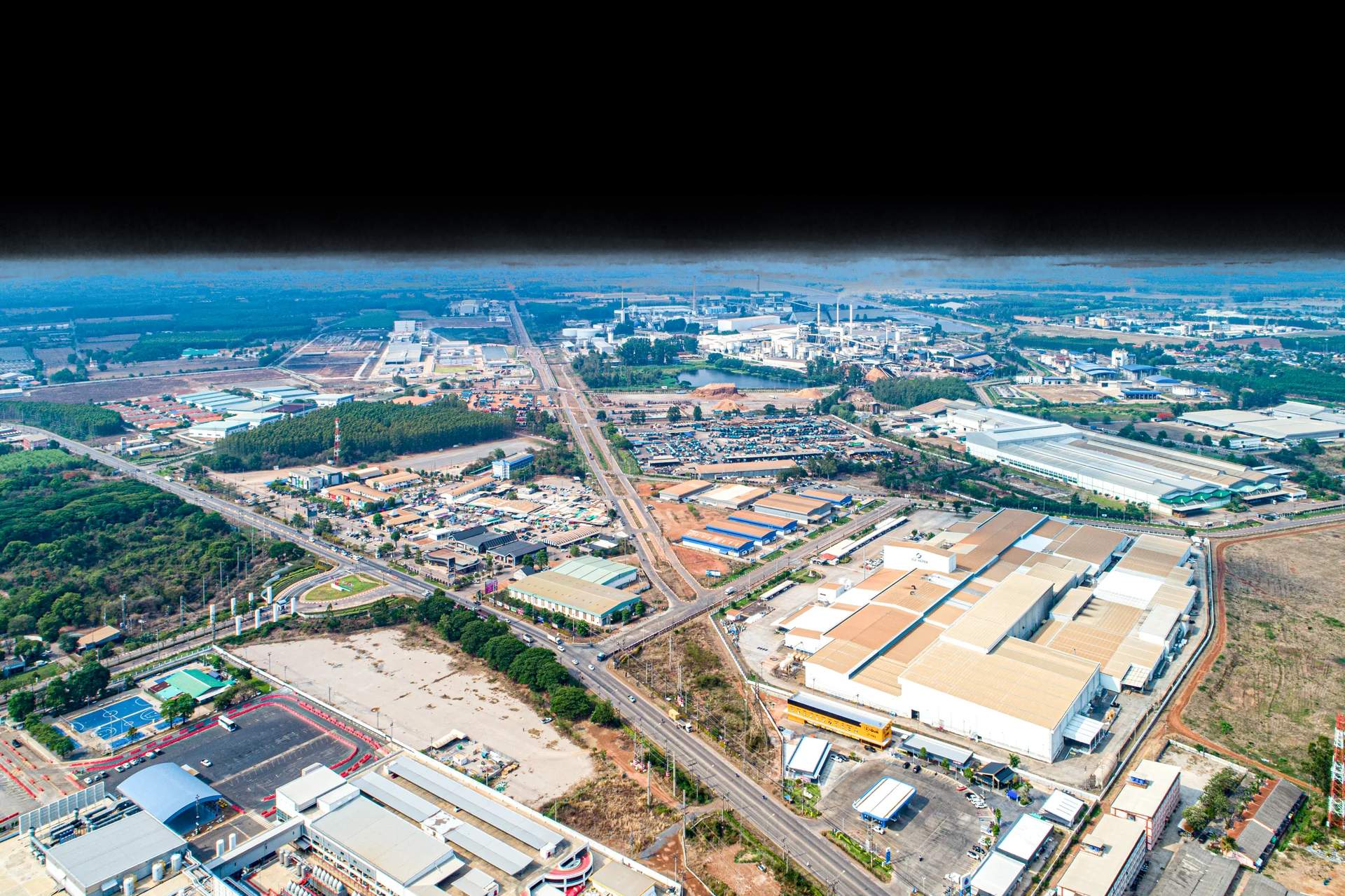
Carbon Neutrality and Net Zero Greenhouse Gas Emissions can be achieved within Thailand’s industrial sector. 304 Industrial Park serves as a facilitator that fully supports environmental sustainability, providing infrastructure for industries seeking to elevate their ESG standards, such as the full adoption of renewable energy.
- The industrial park operates biomass power plants with a total generation capacity of 398 megawatts, certified by I-REC
- Electricity is generated from floating solar power systems with a total capacity of 157 megawatts
- A wastewater treatment system with a capacity of 196,200 cubic meters per day, treating wastewater to a high standard that allows it to be reused, with no discharge into the environment (“Zero Discharge”)
We are strongly committed to supporting Carbon Neutrality and Net Zero Greenhouse Gas Emissions, promoting sustainable and environmentally friendly development both now and in the future.
Related News & Media


304 Industrial Park
Creating a future-ready ecosystem for businesses, with green energy, complete facilities, and global connectivity.
Contact Us